Related: Cricut blade types and what each one actually cuts
Every "my Cricut stopped cutting" message in my inbox has the same root cause, and it is almost never the machine. Nine times out of ten it is a dull blade, a blade seated wrong in the housing, or a blade that was never the right shape for the material in the first place. This art blades buying guide is the answer I keep typing out: what the four blades I actually recommend are for, which one seats inside a Cricut housing, and which ones belong in a craft knife on your desk.
The confusion is fair. A search for art blades dumps Cricut fine point blades, #11 hobby blades, and craft knife replacements into one grid, and they are not interchangeable. Two of the four blades here cut on a mat inside a machine. The other two are hand tools, and buying the wrong one means you spend an evening blaming Design Space for a problem that cost a few dollars to fix.
Best Overall: Premium Fine Point Blade for Cricut Maker 3/Maker/Venture/Cricut Explore 3/Air 2/Air/One
This is the only blade in this guide that goes inside the machine, and it is the one I point beginners to first. You get two fine point blades and one housing, and it is listed for the Maker 3, Maker, Venture, Explore 3, Air 2, Air, and One. That covers every current Cricut most people own.
The housing is the part that makes this the pick. Most people replace blades forever and never think about the housing, but a housing that has been dropped, over-tightened, or has a stretched spring lets the blade wobble. A wobbling blade does not slice vinyl, it tears it, and then you get ragged edges and letters that lift during weeding. If your cuts went bad and a fresh blade did not fix it, the housing is the suspect. This set solves both at once, which is why it beats buying blades alone.
On materials, it handles the everyday list: paper, vinyl, HTV, cardstock, vellum, and kraft board. That is 90 percent of what a shop or a hobbyist cuts in a week. It is a fine point blade, so if you are cutting something thick enough to need a deep point tool, this is not that blade and no amount of pressure setting will make it one.
Best Value: 60 Pack Exacto Knife Blades 11, Craft Knife Blades Replacement Set
Read the product name carefully, because this is where people get burned: these are craft knife blades, not Cricut housing blades. They do not click into your machine. They go into a standard #11 handle, and that is exactly why they earn a spot in a working setup.
Here is the honest math of blade life. A #11 blade is sharp for a session or two of hand work, then it starts dragging. A dragging blade tears paper, skips across vinyl, and leaves fuzz on a kiss cut that you then have to clean up with another blade. When you buy blades five at a time, you ration them, and rationing means you keep cutting with a dull blade to avoid a trip to the store. Sixty blades ends that behavior. You swap the moment it drags, because the next one is sitting right there.
Where I reach for one: weeding tiny vinyl letters, trimming transfer tape, cutting vinyl off the roll before it goes on a mat, cleaning up papercraft edges, and slicing sticker sheets apart after printing. None of that touches the Cricut. All of it decides whether the finished product looks handmade in a good way or a bad way.
How I tested
I run the same three cuts on every blade that comes through my shop, and I have been doing it long enough that the failures all look familiar.
The vinyl kiss cut: a sheet of adhesive vinyl on a standard grip mat, cut so the vinyl releases but the backing stays intact. A good blade leaves clean edges and weeds in one pull. A dull one stretches the vinyl, leaves a lip, and makes small letters lift with the weed.
The cardstock cut: a detailed shape with interior corners and a couple of tight curves. This is the test that exposes tip damage, because a chipped point snags on cardstock instead of slicing it. You can hear it before you see it.
The HTV cut: heat transfer vinyl is softer and more forgiving than adhesive vinyl, which means it hides a slightly dull blade for a while and then fails all at once. I cut a small design and check whether the carrier sheet stays clean.
For the hand blades, the test is simpler: trim a strip of vinyl, cut a paper shape with corners, and see how much pressure it takes to get through the material. A fresh #11 should need almost none. If you are pressing hard, the blade is done and you are about to snap the tip.
I also check the housing on any blade set that includes one. I seat the blade, look for wobble, and cut a circle. Circles are unforgiving. If the housing is loose, the start and end point of the circle will not meet.
Analysis and test results
The single most useful thing I can tell you about the art blades question is that most blades sold as premium are the same steel with a different label. What separates a good blade from a bad one is tip geometry and how well it seats, not the word on the package.
Fine point blades live and die by seating. The blade has to sit square in the housing, and the housing has to sit square in the machine. Any play in that chain shows up as a cut that wanders by a fraction of a millimeter, which is invisible on a big shape and ruinous on small text. That is why the set with a housing is my overall pick: you are buying a fresh link in the chain, not just the sharp part.
Steel matters more for hand blades, because you feel the difference in your wrist. A carbon steel #11 that holds an edge means less pressure, and less pressure means fewer snapped tips and fewer slips into the vinyl. The Excel blades in this guide are American made carbon steel, and the Fiskars set is a brand name replacement for a utility craft knife. Both are five packs, and both are the right shape for hand work. Neither belongs in a Cricut housing.
Material abrasiveness eats blade life faster than anything else. Glitter vinyl, kraft board, and anything with a textured backing will dull a fine point blade in a fraction of the cuts you get from plain vinyl. This is not a defect, it is the material, and it is why I keep a separate blade for rough stock instead of burning my good one on it. Label it with tape if you have to. Your future self will thank you.
One more thing, because it comes up weekly: do not force a #11 blade into a Cricut housing. It is the wrong shape, it will not seat, and the best case is a bad cut. The worst case is a cracked housing and a blade tip somewhere in your mat.
The art blades reference table
| Blade | What it fits | Best for | Where to buy |
|---|---|---|---|
| Premium Fine Point Blade, 2 pack with housing | Cricut Maker 3, Maker, Venture, Explore 3, Air 2, Air, One | Vinyl, HTV, paper, cardstock, vellum, kraft board | 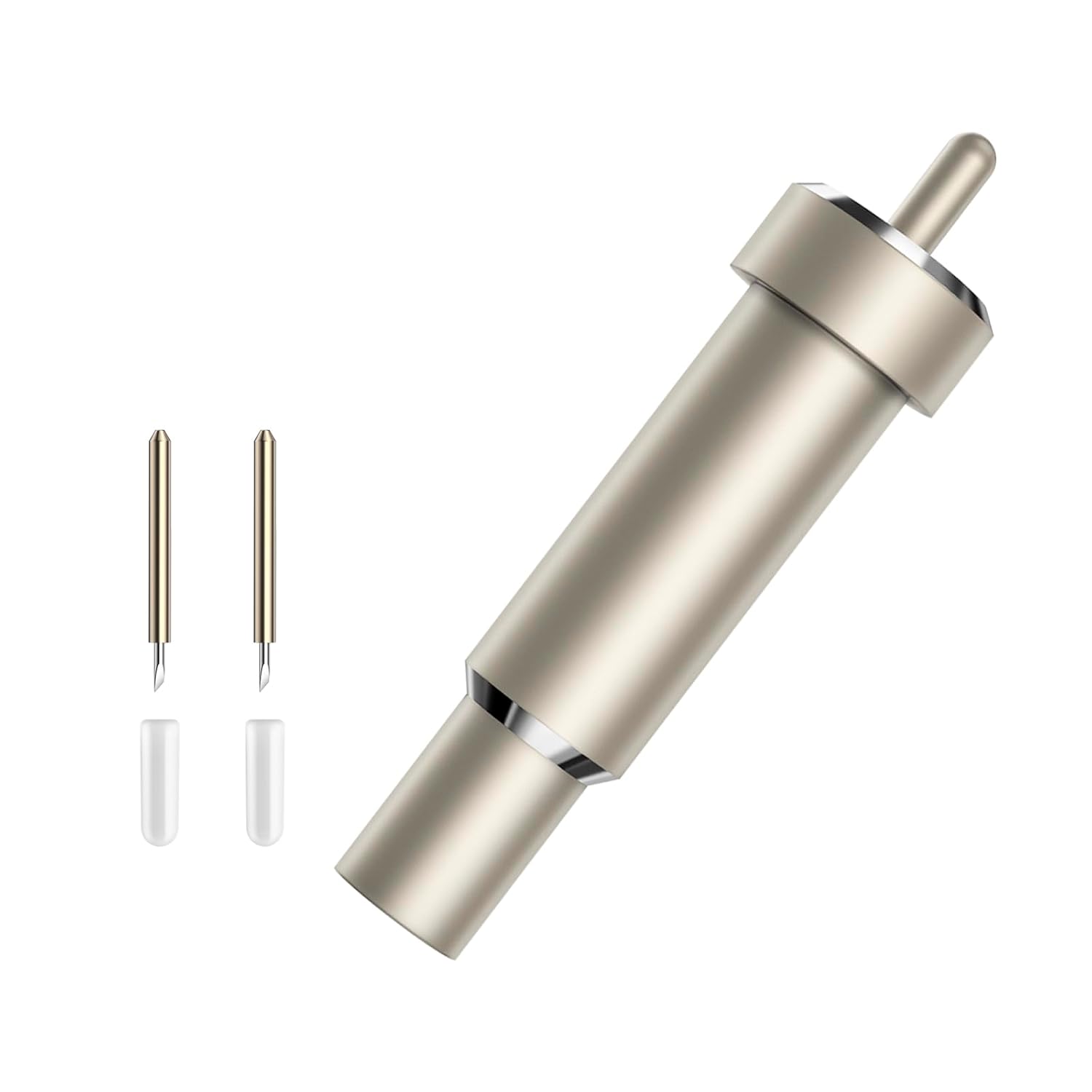 Visit on Amazon → |
| 60 Pack Exacto Knife Blades 11 | Standard #11 craft knife handles | Weeding, trimming, papercraft, sticker cleanup | 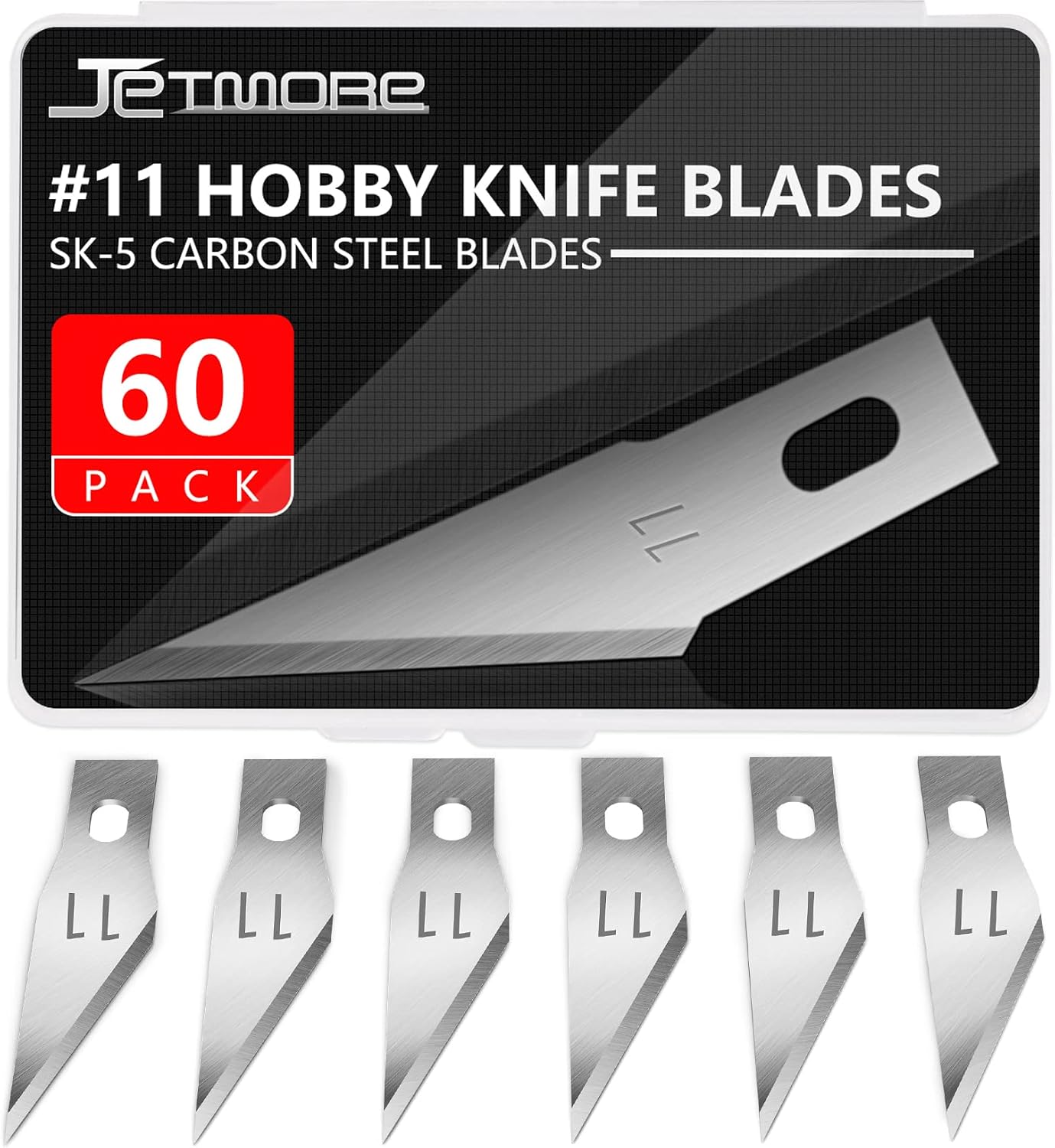 Visit on Amazon → |
| Excel Blades #11, 5 pack | Standard #11 craft knife handles | Fine hand trimming, carbon steel edge | 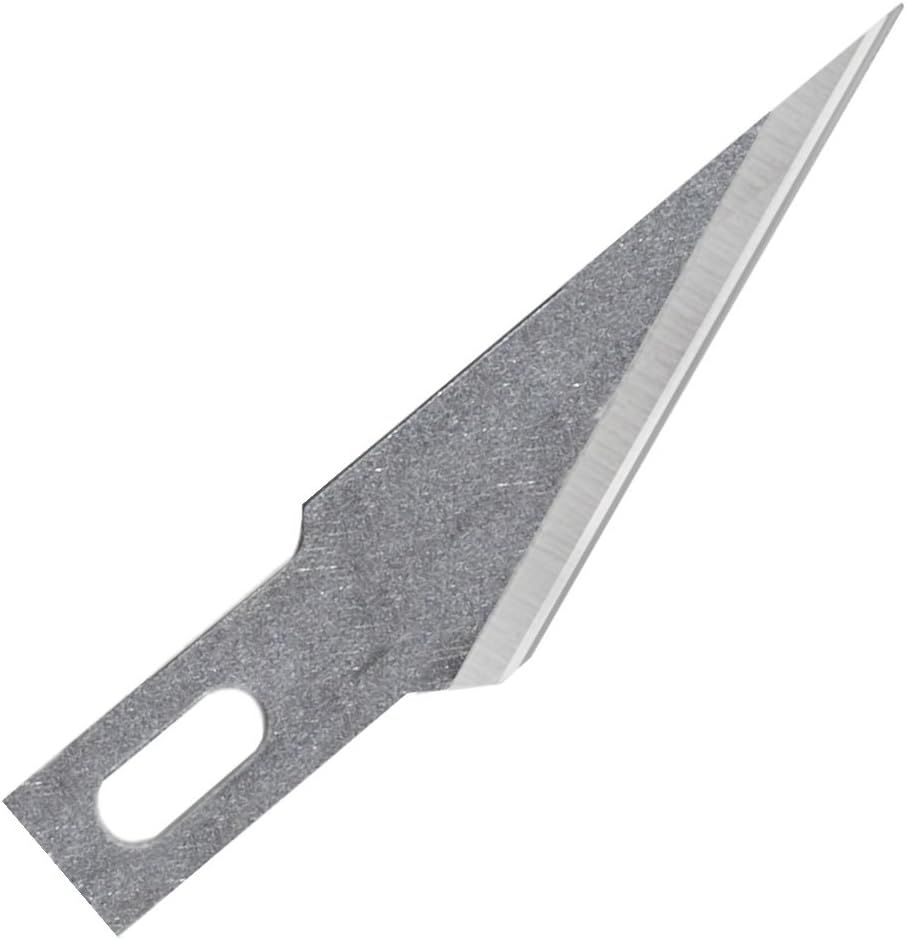 Visit on Amazon → |
| Fiskars Standard Replacement Blades #11, 5 pack | Fiskars utility craft knife and standard #11 handles | General desk cutting, brand-name replacement | 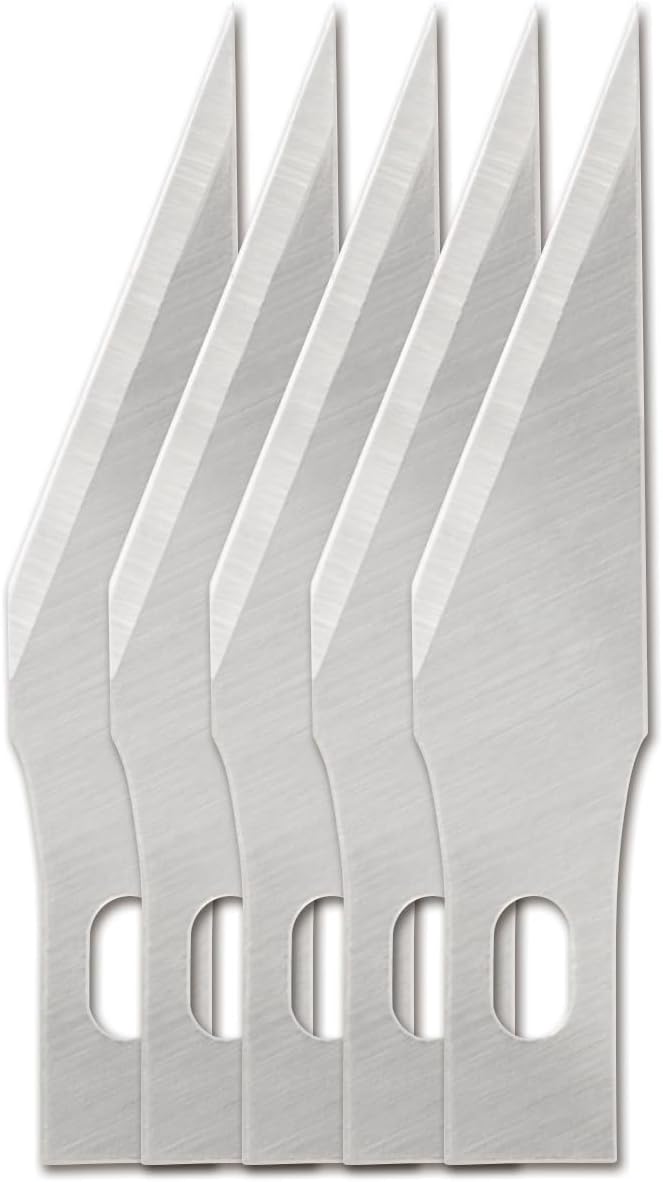 Visit on Amazon → |
The craft knife pair: Excel Blades and Fiskars
The Excel Blades five pack is the one I keep by the mat for detail work. American made carbon steel, standard #11 shape, and the blades arrive consistently sharp from blade to blade. If you do small, fussy hand cutting, this is the set to own.
The Fiskars five pack is the safer buy if you already own a Fiskars utility craft knife, because you know the fit. It is also the one I hand to students, since the brand is familiar and the price of entry is low. Between the two, pick by what handle is already on your desk. If you have neither, the sixty pack above is the better value per blade and the Excel set is the better edge. Both are fine.
Does a #11 blade ever beat a Cricut blade?
Yes, and this is the part new owners miss. A Cricut blade cuts shapes you designed. A #11 blade cuts the things a machine is bad at: trimming a curved edge by hand, lifting a corner without gouging the paper, slicing a printed sticker sheet, cutting a vinyl scrap down to a size that fits a mat.
That is why I treat these as two categories in the budget, not one. Machine blades are a consumable tied to blade life and material abrasiveness. Hand blades are a consumable tied to how much detail work you do. If you are running an Etsy shop, both lines get used every week. If you are a hobbyist who cuts fifty stickers a year, buy the machine blade set and a five pack of hand blades, and you are set for a long time. More on pressure settings and material quirks lives in my blade housing and pressure settings notes.
Should you buy the Premium Fine Point Blade?
Yes. It is the blade that keeps the machine running, and the included housing is the part most people never think to replace. If your cuts went ragged and a new blade did not help, this set fixes the actual problem.
The honest caveat: it is a fine point blade, so it will not replace a deep point tool for thick materials, and it will not last long if you feed it glitter vinyl every day. Buy two sets if you cut abrasive stock, keep one labeled for rough work, and stop blaming the machine.
Should you buy the 60 Pack Exacto Knife Blades?
Yes, with one condition: you understand it is a hand tool, not a Cricut part. Sixty blades means you stop rationing, and stopping rationing is the single biggest quality upgrade in hand cutting. You swap the blade the moment it drags instead of pushing through and tearing the material.
If you already own a pile of #11 blades, skip it. If you are still using the one blade that came with your knife two years ago, this is the cheapest fix in this entire art blades buying guide, and it will change how your weeding looks.